What Buyers Should Know About Documenting container loading and seal details
A loading record should let the buyer reconstruct what entered the container, how it was arranged, what condition it was in, and how the sealed unit was handed over. Clear documentation helps resolve quantity, damage, packing, and seal discrepancies while goods are still traceable. Agree on the record and responsibility before the loading date.
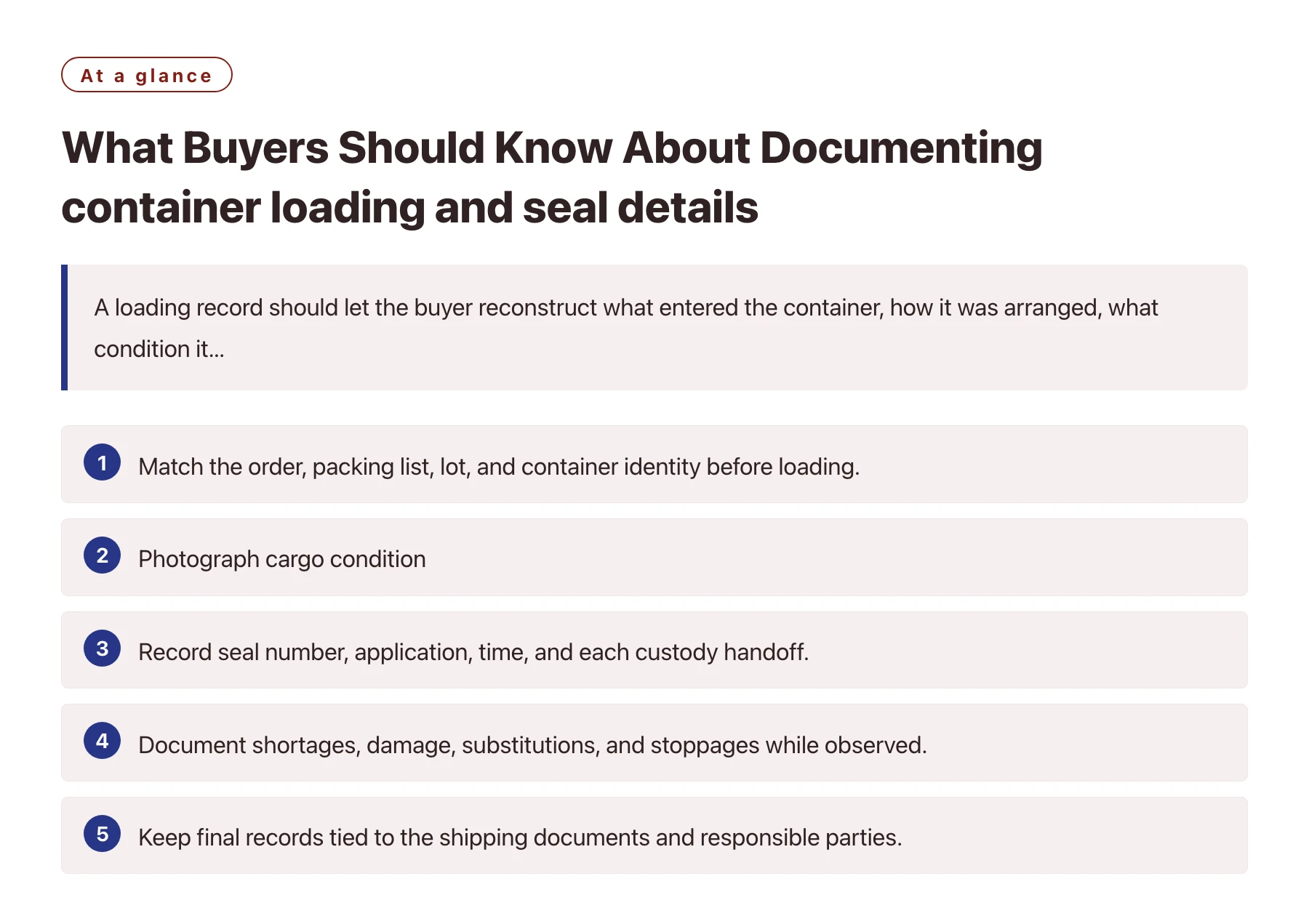
Key takeawaysMatch the order, packing list, lot, and container identity before loading. · Photograph cargo condition, counts, loading sequence, and final closure. · Record seal number, application, time, and each custody handoff. · Document shortages, damage, substitutions, and stoppages while observed. · Keep final records tied to the shipping documents and responsible parties.
A useful loading file combines written checks, time-stamped images, and clear identifiers rather than a folder of unlabeled photographs.
1. Agree on the loading record before goods are ready
Define who will attend, what shipment identifiers must appear, which records are required, when photographs are taken, and how findings are escalated. Confirm the planned container type, quantity, loading location, date, and responsible warehouse or factory contact.
Provide a checklist that follows the actual sequence: container arrival, inspection before loading, cargo verification, stowage, securing, closing, seal application, and handoff. State how a delayed or partial load will be recorded. Tell the supplier that material changes or substitutions require notice and authorization.
2. Verify shipment and container identity
Before opening packages, compare purchase order, packing list, shipping marks, SKU, quantity, lot or batch, and carton labels. Record any discrepancy between documents and physical goods. Note supplier, site, order number, booking reference, and planned destination in the report.
Record container number and equipment condition. Photograph the number plate and interior before loading, including floor, walls, roof, doors, odor, moisture, holes, residue, or other conditions that could affect cargo. If equipment is unsuitable, pause and document the issue before cargo is placed inside.
3. Check cartons and cargo condition
Inspect representative packages for crushing, tears, wetness, contamination, opened seals, weak strapping, or signs of mishandling. Confirm package count and shipping marks against the agreed documents. Identify packages with damage before they are obscured or loaded.
Record how the sample was selected and the scope of inspection. A visual check cannot establish hidden product condition inside every carton. If the order requires carton opening, functional checks, or verification of inner packs, define the quantity and method in advance. Distinguish observed facts from supplier explanations.
4. Record loading sequence and quantity
Take photographs at identifiable milestones: empty container, first rows, intermediate stages, completed load, door area, and final closure. Include enough context to show location and sequence, with close views for labels or damage where relevant. Keep original files and timestamps where possible.
Maintain a loading tally by SKU, carton count, pallet count, lot, and any short or excess quantity. If pallet labels are used, capture their identifiers. Document goods loaded after inspection, added cartons, or changes to the approved packing list, and record who authorized them.
5. Document stowage, weight, and securing observations
Record observed loading pattern, use of pallets, blocking, bracing, straps, dunnage, and protection against movement or contact damage. Note uneven distribution, unstable stacks, unsupported voids, or cargo pressing against doors. These observations support traceability; they do not replace a qualified cargo-securing plan.
Confirm that packaging and marks remain visible where required and that heavy or fragile items are treated according to agreed instructions. Record any loading method that differs from the approved plan. For technical or regulated cargo, consult the responsible shipper and applicable requirements rather than relying on a generic checklist.
6. Capture seal details and chain of custody
Record the seal identifier exactly as printed, seal type if specified, who supplied it, who applied it, and the date and time of application. Photograph the seal in place with the closed doors and, where feasible, a readable close view of its number. The number should match the shipping record.
Document every subsequent opening, replacement, or transfer of custody, including the reason, person, time, old seal number, new number, and supporting evidence. If a seal is damaged or does not match the documents, notify the designated parties promptly and follow their instructions before dispatch.
7. Log findings and resolve discrepancies
Use a finding log with unique number, location, description, quantity affected, photograph reference, immediate containment, responsible owner, and disposition. Record shortages, damaged packaging, mixed labels, unapproved goods, and interrupted loading. Do not convert an unresolved observation into a pass merely because the container was closed.
Agree who can authorize sorting, replacement, rework, a partial shipment, or a documented concession. Note whether the issue was corrected before loading, after loading but before closure, or after dispatch. Preserve the decision and evidence with the shipment file.
8. Assemble the final shipment file
Collect the inspection report, loading checklist, packing list, commercial invoice reference, container and seal numbers, photographs, discrepancy log, approvals, and handoff time. Use consistent names and retain a manifest that maps each image to a shipment stage. Store records with access control and an agreed retention period.
Incoterms® rules allocate specified delivery tasks, costs, and risks between seller and buyer when incorporated into the sales contract; the chosen rule and named place should be reviewed alongside the actual handoff documents. They do not replace a container inspection record or settle every operational detail. [1]
9. Close the handoff with a clear release decision
Before departure, confirm the final loaded count, container number, seal record, exceptions, and required documents. Identify who accepted custody and when the vehicle or container left the site. Share the report quickly enough for discrepancies to be escalated before the next transport stage.
Buyers arranging supervision during container loading should agree on inspection scope, photo evidence, reporting timing, and escalation contacts before loading. Keep the accepted plan, changes, and release decision connected to the shipment so downstream teams can reconcile what arrived against what was dispatched.
Sources
Frequently asked questions
Which container details should be photographed?
Capture the container number, condition before loading, cargo stages, final closure, and readable seal identifier.
What if the seal number differs from the shipping record?
Pause dispatch when possible, notify designated parties, record the discrepancy, and document any authorized correction.
Do loading photos prove every carton quantity?
No. Photos show selected views; reconcile a documented tally and report the scope and limits of verification.
Who should retain the loading report?
The buyer and responsible shipment parties should keep the report with order, packing, seal, and handoff records.