M0602C-112 for Low-Profile Robot Wheel Module Designs
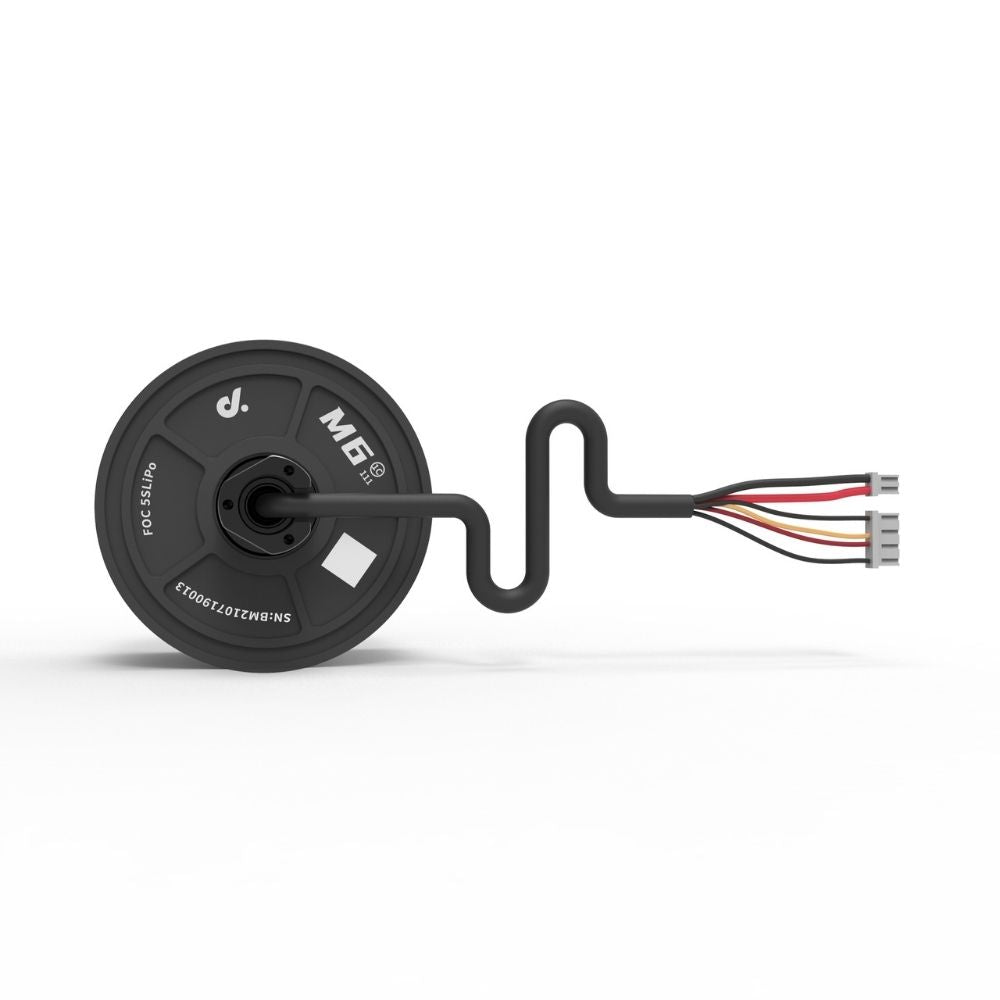
M0602C-112 is designed for compact robot wheel systems where installation height, torque output, and motion accuracy must be balanced. With a low-profile structure, encoder feedback support, and direct-drive architecture, it fits mobile robots, AGVs, and inspection platforms. In applications requiring 4–12 hours of daily operation, the motor design helps maintain stable movement while preserving internal chassis space.
Low-profile robot platforms are increasingly using compact wheel modules because batteries, sensors, computers, and payload areas compete for limited space. A traditional motor with gearbox assemblies may increase module thickness by 20–40%, while an integrated motor structure reduces mechanical parts and simplifies installation.
The M0602C-112 fits designs where wheel modules must remain thin without reducing motion performance. The motor is suitable for indoor robots, automated vehicles, and compact industrial systems that require repeated acceleration, braking, and precise speed control.
A compact wheel motor must provide consistent torque, accurate feedback, and reliable thermal performance instead of only reducing physical size.
Mobile robot chassis design depends heavily on wheel module dimensions. A reduction of 10–20 mm in motor installation height can create additional room for batteries, controllers, and sensor assemblies.
| Design factor | Influence on robot structure |
|---|---|
| Motor height | Affects chassis thickness |
| Motor diameter | Influences wheel position |
| Feedback system | Improves movement accuracy |
| Thermal design | Supports longer operating periods |
Many service robots introduced between 2015 and 2025 adopted smaller wheel modules because indoor environments require lower profiles and quieter operation. A compact motor module allows designers to maintain more flexible layouts without increasing the overall robot size.
The M0602C-112 uses an architecture similar to modern direct-drive systems. The motor connects more directly with the wheel mechanism, reducing the need for additional transmission components.
Compared with systems using multiple mechanical parts, direct-drive solutions can reduce mechanical transmission losses by approximately 5–15% depending on system design. Fewer components also reduce assembly requirements and simplify maintenance procedures.
The Direct Drive M0602C-112 approach is suitable for robotic applications where smooth movement and compact integration are required.
Torque performance remains important because wheel motors must overcome rolling resistance, payload changes, and acceleration forces. The relationship between wheel torque and ground force depends on wheel radius.
For a 50 mm radius wheel, a motor producing 1 Nm torque can theoretically generate about 20 N of wheel force before efficiency losses. With larger wheels, obstacle crossing improves, but required torque also increases.
| Wheel radius | Approximate force from 1 Nm torque |
|---|---|
| 40 mm | 25 N |
| 50 mm | 20 N |
| 60 mm | 16.7 N |
Robot platforms often operate below maximum torque levels. Many indoor mobile robots use around 30–70% of rated torque during normal movement, leaving additional capacity for acceleration, turning, and uneven surfaces.
The M0602C-112 is suitable for applications where stable continuous operation matters more than short peak output. Delivery robots, laboratory vehicles, and inspection machines commonly require repeated motion cycles throughout the day.
A wheel motor operating for 8 hours per day requires stable temperature control because heat affects efficiency, current demand, and long-term reliability.
Thermal management becomes more difficult as motor size decreases. Smaller housings provide less surface area for heat release, so electromagnetic design and internal heat paths become important.
Motor temperature depends on several conditions:
-
winding resistance;
-
operating current;
-
movement frequency;
-
external cooling conditions.
In robotic systems operating hundreds of start-stop cycles daily, temperature control helps maintain consistent speed performance. A motor that reaches high temperatures quickly may require reduced operating current, affecting movement capability.
Encoder feedback is another important part of modern robot wheel modules. Open-loop systems cannot fully compensate for changes caused by floor conditions, friction, or battery voltage.
Closed-loop wheel control measures motor rotation and adjusts output according to controller requirements. This improves:
| Function | Result |
|---|---|
| Speed control | More stable velocity |
| Position estimation | Better navigation accuracy |
| Turning control | More consistent paths |
| Low-speed operation | Smoother movement |
Many autonomous robots use encoder resolutions from several hundred to several thousand counts per revolution. Higher feedback accuracy helps navigation systems estimate wheel movement during long operating periods.
Low noise is also important for indoor robotic equipment. Hospitals, offices, hotels, and retail environments often require robots that operate near people without producing excessive mechanical sound.
Noise sources usually include:
-
gearbox vibration;
-
bearing friction;
-
mechanical contact;
-
electromagnetic effects.
Reducing transmission components can lower mechanical noise compared with some conventional motor systems. Smooth wheel rotation improves user experience when robots operate continuously in public areas.
Environmental protection affects motor reliability because robotic equipment may encounter dust, cleaning fluids, and changing humidity conditions. Industrial wheel modules commonly require protection against particles and occasional liquid exposure.
The M0602C-112 design can be integrated into systems requiring protected motor housings, reliable connectors, and stable cable routing. For commercial robots operating 300 or more days per year, maintenance frequency becomes an important engineering consideration.
A compact motor module should support both mechanical integration and long operating periods under repeated usage.
Application requirements vary between robot types. Delivery robots usually prioritize battery efficiency and quiet movement, while inspection robots require accurate positioning and stable low-speed control.
| Application | Typical requirement |
|---|---|
| Delivery robot | Quiet movement and long operation |
| Inspection robot | Accurate positioning |
| AGV | Continuous industrial movement |
| Laboratory robot | Smooth low-speed control |
Since 2020, compact autonomous platforms have increased demand for smaller wheel modules with integrated feedback systems. The M0602C-112 matches this trend by combining a compact package with functions required for modern robotic motion systems.
The motor selection process should consider chassis size, wheel diameter, operating time, and control requirements together. A smaller motor does not automatically improve a robot if torque capacity or thermal performance is insufficient.
M0602C-112 provides a balanced approach for low-profile robot wheel module designs. Its compact structure supports space-limited chassis layouts, while feedback capability and thermal considerations support reliable operation in mobile robotic applications.